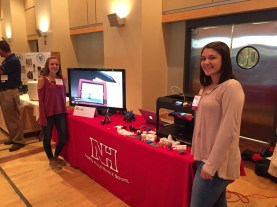
Today was the culmination of a year 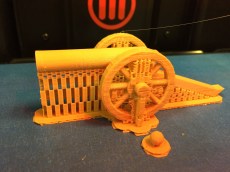 of implementing a $10,000 STEAM Grant to the 8th Grade Social Studies program at my school. At our local STEAM Showcase event, we were able to put some of our students in positions to share what they learned in the previous year, what skills they developed, and, as teachers, reflect upon the challenges, successes, and opportunities for growth. We were supplied with 3D printers, supplies, and 3D scanners to outfit our classrooms, but, the knowledge and experiences gained were just as valuable.
The most common question we received today, though, was something along the lines of this: “3D printing…but in Social Studies…in a history class?” Listen, STEAM concepts are great. Students should be challenged to use design thinking to combine knowledge from a variety of previously separate  subjects to be creators. But, shouldn’t these skills be integrated within classes throughout a student’s school day, rather than isolated to a single class that is the designated STEAM area?
Using this belief, myself and two of my colleagues applied for a 2015-2016 STEAM Grant, planning to allow students to create history, designing and making historic landmarks, forts, and innovations that have played vital roles in American History. Full disclosure: we took a massive risk. Not one of us had any experience in 3D printing when we applied for the grant. When we got word that our grant was accepted, there was a definite learning opportunity for not only our students, but for us as teachers.
 Looking back, I learned just as much as my students about trial and error, problem solving, and design thinking. We actually had some hiccups early on as we were sent a faulty machine, and decided to send all of our devices back to the supplier to select a different model. This resulted in a delay to our plans to start our implementation in September. Instead, we were looking at January.
Fast forwarding to today, our students featured our Civil War Innovations project. Last year, students selected a different Civil War innovation in which they had an interest. Some students selected weaponry, some selected musical instruments, some focused on uniforms and other accessories, while others decided to direct their attention to technological and transportation innovations. They began researching the impact and legacy of these items before making a decision on what it was that they wanted to create in 3D form. They then took to the task of measuring, designing, erasing, re-designing, and sketching their soon-to-be creations.
Another hurdle, though: Students really didn’t have much, if any, of a knowledge base of how to take their sketched designs and transform them into a file downloadable for 3D printing. The solution: Tinkercad. Props to my ADE colleagues for recommending this resource! It was simple to use, as I believe it is really designed for younger learners. However, my students had to start somewhere, and, after going through a series of quick demos and interactive training lessons, most students were hooked.
Students excitedly worked together, solved each others problems, and made suggestions to each other of how to improve their designs. What I thought would take a couple of weeks to accomplish really took a matter of days. Students were anxiously awaiting their prints, which resulted in setting up prints to run after school hours and late into the evenings. I got into a steady routine of monitoring prints remotely and asking our awesome school custodian to turn of the machine’s power at night before his shift ended. I would hope that this experience led some of my students to enroll in high school level 3D courses, as they now could visualize their creations in addition to learning history-based content. So, to answer the question…3D printing…in social studies…in American History? Yes. Take a risk – why not?
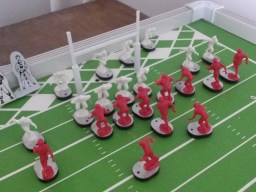 memories of watching my older brother and neighbors gather around excitedly to watch a table of plastic move around in an unpredictable fashion. I’ll be honest, I didn’t get it. But, wanting to be “part of the fun,” I, too, sat around and watched. What created this excitement? Why was this so engaging?
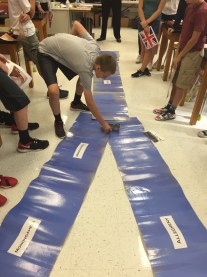 in political debates about energy sources. In my class, we recently were discussing our own city through the lens of why it was such a critical component within the realm of the French and Indian War. Could we have simply looked at a map of Pittsburgh? Certainly. Could we have talked about the geographic features of the region? Absolutely. But, using the “all of the above” and “electric football” mentality, what would happen if students got to hold physical objects, move around the room, and collaborate. Students were provided with placards of rivers, physical features, modern day landmarks, landmarks from the 1750s, and flags and given the task of using their own experiences to recreate our city.The end result was a level of engagement in class activities and an inquisitive attitude to “figure it out” as a group.
 every day. Student collaboration, teacher collaboration, collaboration with experts. An inherent and essential element of collaboration to make the best possible learning experiences for our students is sharing. Gone are the days where a teacher makes the “perfect test” and keeps that exam locked up in a file cabinet behind his desk (Okay, I know that this may still happen, but let’s pretend.) Most teachers are now extremely willing to share ideas that work, share lessons and strategies that engage students, and share resources that improve the overall quality of our students’ education.
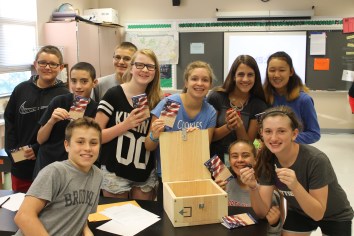 head first into BreakoutEDU, and it is fair to say that it was an awesome initial experience that left all involved wanting more. I have never seen students more excited about analyzing, discussing, and thinking about primary source documents and artifacts from outlets ranging from
  ordering items, seeing delivery times of 4-6 weeks from BreakoutEDU. With the start of the year falling into the same timeline, I figured I could build my own box(es). So I broke out the table saw, a 1 x 12 oak board, some screws, and I was in business. A trip to Lowe’s and an Amazon Prime order quickly furnished the supplies and locks needed to complete one box. But, of course, I needed some graphics, right? Using a Harbor Freight coupon, I purchased a
  tations of history. Students analyze primary sources almost daily in class, as they provide the unfiltered lens into our nation’s past, allowing students the ability to connect to another person’s emotions, fears, biases, and experiences.
 has just been elected who does not respect American History. As such, this president wants to destroy all primary source documents and artifacts to make sure that his/her own version of American History remains unchallenged. With the foresight that this may happen at some point, our founding fathers locked away the one item that can stop this tyrant is his/her tracks. Students have 40 minutes to use the clues left by some of the president’s secret service to open the locks, including 3 and 4 digit numerical locks, directional lock, word lock, and key lock before the president signs an executive order to have all documents destroyed.
 could prevent a president from abusing his/her power? This answer was obvious: the Constitution. What was not obvious was how I could possibly provide each of my students with a Constitution. Enter TeachingAmericanHistory.Org. I had attended some great events sponsored by TAH, and, after reaching out to Monica from TAH, they generously donated 100 pocket Constitutions to be provided to my students. What makes this more perfect? I planned to implement this activity on Constitution Day 2016.
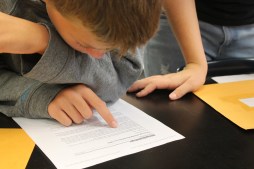 were the collaborations that occurred. Students divided tasks, brainstormed ideas, read and re-read (and re-read) documents, tested theories, laughed together, became frustrated together, and encouraged each other. At the end of each period, students asked “when can we do this again?” That made the summer prep worth it. As a teacher, this offered the opportunity to get to know my students in a setting outside the norm. Who is a leader? Who is a follower? Who steps up when challenged? Who gets frustrated easily? Who perseveres? These are all life-long skills that we want our students to develop, in addition to content knowledge.
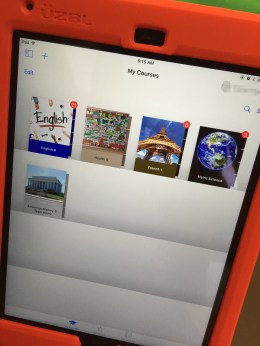 E school but also have many teachers who have a wealth of Apple Education experience. This summer, we decided to proceed with iTunesU to take advantage and fully embrace the Apple ecosystem. Several teachers have jumped right in, and students have offered positive feedback. While Google Classroom has some outstanding features and plug-ins, iTunesU offers a one-stop shop for housing student courses with little to no wait time lag. Teachers have also begun to house their clubs on iTunesU, offering instant push updates to students, a feature that many appreciate. In conversations with students, I had a belief that some may not like having most of their materials in a digital format, instead opting print. When a choice is given, it has been about 90% in terms of students opting to just utilize digital materials with an iTunesU course. But, again, the true power of the iPad lies in designing lessons that allow students to create, collaborate, and respond to real-life questions rather than annotating worksheets.
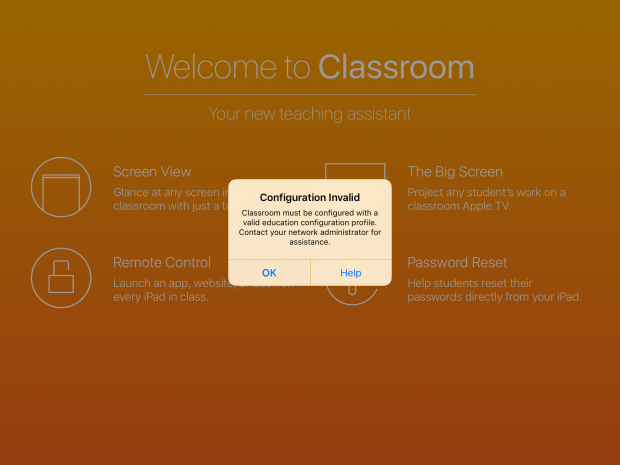 Our system is currently set up in Apple Classroom from data pulled from our SIS and managed by our MDM, JAMF. As a result, we do not have the power to manually create classes. Apple Classroom appears to have so many great features, but sadly, I am taunted by this screen each and every time I open the app.
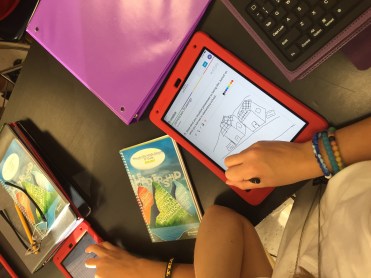 ot having them pick them up from a cart each day and then return them at the end of class is having 3-4 extra minutes of class each day. I have used this additional time to add GoFormative activities to my opening and closing lessons, allowing students to share their prior knowledge with their peers and me as well as reflecting upon what they learned and/or how their views changed as a result of a lesson.
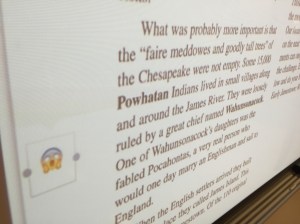 Specifically, each paragraph students read had a theme or a tone. They were to select one emoji that they personally thought did the best job of relaying this theme/tone. What was more important to me? Students were engaged and could not wait to share their verbal explanation defending their rationale of their theme or tone. What may have been a passive reading instantly morphed into one where students couldn’t wait to get to the next paragraph. Embrace emojis!
 Inclined to Teach